


Oct 2025 Mental Health Matters
05/11/2025

Welcome to the October edition of the Mental Health Matters newsletter, brought to you by the Campus Mental Health Strategy! Here you can keep up to date with our latest news, learn about resources to support children and young people's mental health and wellbeing, sign up for events, and more.

We're dedicated to amplifying and celebrating lived and living experiences of mental health challenges and recovery. We're proud to feature this artwork by our Lived Experience Advisor, William.
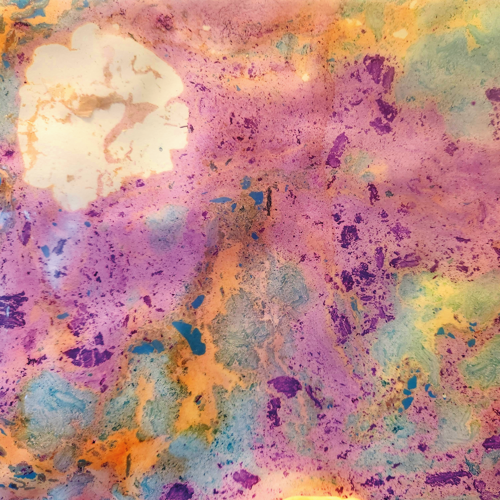
We asked William about his artwork, Finding My Way, and why he wants to share his lived experiences.
Can you describe your mental health journey?
I have lived experiences of depression, anxiety, and a physical disability from a brain tumour, which required multiple operations and treatment at the RCH. Growing up with a dual disability, I found it very hard to fit in at school and felt isolated. I didn't seek help or
was aware of any support because mental illness wasn’t talked about. Later, I was able to talk with my GP, who connected me with a psychologist and a community organisation.
Through engaging in their group programs, I was able to find connection, feel less stigmatised and learn how to use my lived experience to help improve services. I now work as a peer support worker and am able to walk with people in their journey and share what has helped me in my life and hold the hope for their recovery.
How is your journey shown in your artwork?
I've tried to illustrate the journey through ups and downs of life. The artwork shows that life can be messy and at other times uncharted like we have no direction. But through the ups and downs that we encounter in life, I feel that it is possible to find purpose and meaning in our life and to create something beautiful.
Why do you want to share your lived experiences?
I want to share my experiences to give people hope and to show that it's possible to live a fulfilling life with mental health challenges and disability. I believe we all have a purpose and that the ups and downs that we go through help us discover who we are and our strengths, talents and abilities. I pray every person can find their way, supports, friendship, and community.

The Campus Mental Health Strategy team has had some huge wins in the last few months, several of which are included in this newsletter edition. Please check them out. I want to recognise and thank the strategy team for their awesome and hard work.
A real highlight in the last month was bringing together the wonderful artists and the wider strategy team to launch the Children’s Mental Health Gallery book. What better way to kick off Mental Health Month in October! Some of the Lived Experience Advisor artists who came to the launch shared their thoughts with me. A few felt connected to a community of people with shared experiences, committed to making things better for children, young people, and their families with mental health concerns at the RCH. Others found the experience of being part of the book and the launch profoundly healing after experiencing the ultimate loss at the RCH.
The last few months have also been a time of reflection and change for the team. April 2026 will bring the end of our five-year strategy. As with the end of any project, some of our wonderful team have already moved on to secure new jobs and sadly, I’m sure we’ll see more leave us in the coming months.
During our reflections, we considered whether we have achieved our objective of making mental health everybody’s business across campus, asking, has our work been worthwhile? While there is still so much more to do, we believe that the strategy has been worthwhile and successful. We presented these reflections recently to the RCH Executive team and the Campus Council, inviting them to consider who will lead the next leg of this journey towards making mental health everybody’s business across the RCH and wider campus.
Thanks again to the team, and to our huge group of supporters including our funders at the RCH Foundation. We’ll be back in the new year for a final report and wrap-up. Belinda Horton, Program Director.
Tell us your feedback on our new Clinical Practice Guidelines on suicide and self-injury.
Suicidal ideation and non-suicidal self-injury (NSSI) are increasing problems in young people, with 7.5 per cent of 12 to 17-year-olds having serious thoughts of ending their life, and 10 per cent reporting harming themselves (Young Minds Matter, 2017).
After a systematic review of existing Clinical Practice Guidelines (CPGs) for mental health conditions in children and adolescents, we found major gaps in clinical guidance for suicide and NSSI.
To address these gaps, we're developing an evidence-based CPG using a recognised framework for integrating available evidence, clinical expertise, and lived experience perspectives.
The CPG can be used by a broad range of professionals who support or care for children and adolescents, including both health and non-health professionals across Australia.
The final draft of the recommendations is now available for public consultation. Campus staff and teams are welcome to review the draft and submit their feedback by 5pm on Friday 14 November, using our online form.
You can give feedback about specific recommendations or provide general comments about the draft.
To view the Suicide and Non-suicidal Self-injury in Children and Adolescents: Evidence-based CPG draft, go to Mental Health Central.
The final CPG is set to be published in January 2026.
We want to thank everyone involved in supporting this important work, which aims to improve mental healthcare for children and young people.
For more information, please contact [email protected].

Optimised BSP tool and new resources are now available
We evaluated the BSP's effectiveness, usability, and impact on improving hospital experiences for children, young people, families, and staff.
Based on our findings, we have now optimised the BSP by:
- streamlining fields and questions to make the tool more user-friendly
- updating language to align with trauma-informed preventative care
- increasing its accessibility within the EMR
These new resources include: To learn more about the BSP and our resources, go to Mental Health Central.
For more information, you can contact [email protected].

Children's Mental Health Gallery Book launch
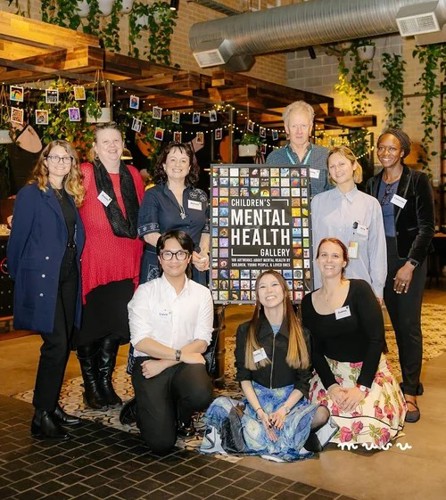
This month, we celebrated the launch of our new Children's Mental Health Gallery Book at the Farmacy Restaurant, The Royal Children's Hospital.
The event brought together artists, supporters, campus leaders, and strategy partners, and focused on connection and celebration.
Selected artists even performed their pieces from the book, which is a beautiful and unforgettable compilation of 100 artworks and stories about mental health created by children, young people, and their loved ones.
Our Lived Experience Lead, Emily Unity (they/them), who curated and designed the book, said on the day, "To all the people who feel they are alone, I hope this book serves as proof that you are never alone".
See more on our on-line MHM Newsletter.
Lived Experience Advisor, Ren (she/they), spoke at the event, sharing their poem, "To that Little Girl", which is featured in the book. Here's an excerpt from Ren's poem:
To that little girl who believed the lies that she was simply "overdramatic" for needing her socks to be just right. I see you.
To that little girl who was told every day that she was "stupid" by her teachers. I see you.
To that little girl who stayed quiet at family events in fear of being called a "brat" yet again. I see you.
To that little girl who put all her efforts into studying because it was the only thing that she knew she could get right. I see you.
To that little girl who sat alone during every lunch, wishing she could be "normal". I see you.
To that little girl who stayed up every night googling "how to be liked". I see you.
To that little girl who trusted the words of everyone around, only to be blamed for their lies. I see you.
To that little girl who had no identity outside the one she had crafted from others. I see you……
One day you will soon see that you were never broken,
that you didn’t need to be fixed.
I wish I could have held you while you cried,
because I know that, despite your happy demeanour,
you were simply a little girl yearning to be loved for who you are.
To share these stories and celebrate lived experience art in such an extraordinary way is an extremely proud milestone for our strategy, and we congratulate Emily on their incredible work in leading this project.
We thank all of the artists for contributing to the book to ensure lived and living experiences are recognised, respected, and embedded across campus and beyond.
You can view the digital book on the Children's Mental Health Gallery website.
All event photography credit goes to Studio Musu, whose compassion and craft beautifully documented the event.

New Mental Health and Wellbeing Learning Hub on LearningHERO!
Each year, The Royal Children’s Hospital treats thousands of children and young people with established mental health conditions and an even greater number of children at risk of mental health problems alongside their physical health concerns or disabilities.
We have recently launched a landing page on LearningHERO to give all RCH staff easy access to educational resources about mental health and wellbeing relevant to the diverse range of work being done across the hospital.
The Mental Health and Wellbeing Learning Hub houses all of our eLearns and trainings, family guides, information and resources from our key areas, as well as external resources - all in one place!
To check out the hub, go to LearningHERO (for RCH staff only).
For more information, please contact [email protected].
ACAMH Learn videos on childhood anxiety
Our Consistent Quality Care Lead, Sydney Stevens, collaborated with the Association for Child and Adolescent Mental Health (ACAMH), to deliver two new video lessons on childhood anxiety.
ACAMH Learn, is a multi-disciplinary knowledge hub that aims to develop understanding with evidence-based content about child and adolescent mental health from world-leading experts.
The lessons delve into the development process, need, and importance of our Evidence-based Clinical Practice Guideline for Anxiety in Children and Young People, and our Childhood anxiety: guide for parents, carers, and supporters.
Lesson one: A Guide to Childhood anxiety: Evidence-based approaches
Sydney presents the development process behind the anxiety CPG and outlines the need for the resource in the context of rising anxiety prevalence and inconsistent clinical care across services. She details the rigorous, multi-phase development process—including stakeholder engagement, systematic evidence reviews, and consensus building—and highlights the final outputs.
Go to: A Guide to Childhood anxiety: Evidence-based approaches.
Lesson two: Engaging carers and family in anxiety treatment
Sydney presents the development of the anxiety family guide and why we adapted the CPG to provide accessible, evidence-based psychoeducation for families. She outlines how the guide supports families throughout the stages of identification, care planning, treatment, and monitoring, and highlights the essential role of caregivers as part of the child’s support network. She emphasises the importance of co-design with Lived Experience Advisors to ensure the guide is trustworthy, usable, and reliable from the perspective of both parents and young people.
Go to: Engaging carers and family in anxiety treatment.
To learn more about ACAMH Learn, go to their free learning portal.
For more information about our anxiety resources, please visit Mental Health Central Resources Hub.

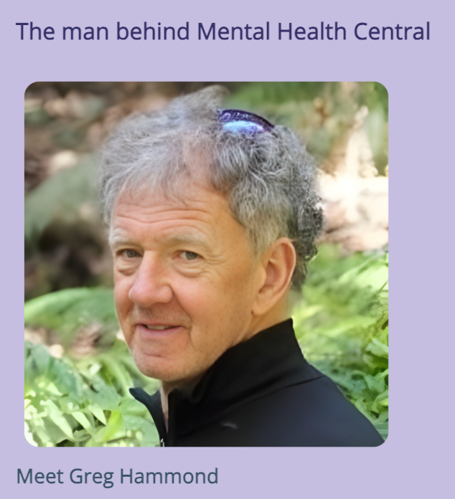
Greg is our expert Digital Administrator for our Mental Health Central website.
Previous to joining MCRI in 2021, Greg was a technology manager and systems administrator in various community-based organisations. Greg's earlier career was as a nurse and family therapist in various psychiatric and general health settings.
Q: What parts of your role and the Campus Mental Health Strategy are you most excited about?
A: Witnessing the involvement of lived experience is the most moving aspect of the strategy for me. It is hard to find the words, but I think it is revolutionary to really let it be a driver of clinical and research standards. I find the analytics (examining data about visits to the website) aspects of my work technically and socially interesting. The internet and websites are an astounding thing we all take so much for granted. Can you imagine living in the 1600’s when they say newspaper publishing took off in Europe? Well, we live in the age when global data networking took off. Fascinating!
Q: Why is Mental Health Central crucial for the work we do across campus?
A: Why is our website, Mental Health Central, important? It is a great source of information about the campus's concerted efforts to bring mental health into focus alongside medical science. But it also gives the aspirations and intent of the strategy a recognisable identity. It's the digital equivalent of a library building. A place people can go. It has a substantive, enduring presence, and concretises the knowledge base of those who support the mental health strategy. They can point to and say, “here it is”. What sets it apart is that it's truly collaborative, and young people’s lived experience is in its DNA. It cannot be stressed enough how transformative this is.
Q: Why does mental health matter to you?
A: I was drawn to mental healthcare during a time when the traditional medical model, focused on abnormality, illness and diagnosis, was beginning to be questioned. I remember asking a psychiatrist-tutor, “So what is normal then?”. This sparked a lively, lasting conversation that now I see underscoring the strategy. Understanding the whole person often begins with asking what has happened to them, not just what is wrong with them. What a relief this change of emphasis can be!
Check out Greg's amazing work at Mental Health Central!
