



Medically unexplained symptoms resource page
Medically unexplained symptoms (MUS) are when young people have real physical symptoms with no medical cause.
Here you will find a suite of resources that help health professionals and families better understand and support young people with MUS.
Resources for health professionals
eLearn module
Medically unexplained symptoms in children and young people, available on LearningHERO (RCH staff)
This eLearn was designed for health practitioners who care for children and young people with medically unexplained symptoms (MUS).
The course aims to:
-
- introduce key concepts about MUS and somatising, including appropriate terminology
- provide information about care pathways, including identification and management of MUS presentations
- improve understanding of functional rehabilitation and multidisciplinary teamwork in MUS cases
- develop clinician confidence to care for and collaborate with children, young people and families in MUS cases
Go to the eLearn on LearningHERO
Podcast
The Education Hub's Conversation with the experts podcast, Medically Unexplained Symptoms (MUS) in young people.
In this episode, host Camille Foley speaks with consultant psychiatrist Dr Andrew Court and paediatrician Dr Alex Cussen about Medically Unexplained Symptoms (MUS) in young people - real physical symptoms like pain or fatigue that don’t have a clear medical cause.
The episode also provides suggestions for service delivery for MUS presentations and provides insights from families and young people with lived experience of MUS.

RCH Clinical Practice Guideline
Coming soon in 2026
Resources for families
Family guide
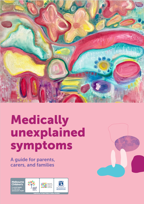
Medically unexplained symptoms: A guide for parents, carers, and families
The guide was made by health professionals, researchers, and people with a lived or living experience of MUS including people who have cared for a loved one.
It provides a clear picture of what MUS are and how they can present, the processes of diagnosis and treatment, and the support options available.
There are four parts in this guide:
-
- Part one: Understanding medically unexplained symptoms
- Part two: The mind-body connection and stress
- Part three: Assessment and diagnosis
- Part four: Treatment and recovery
RCH Kids Health Info factsheets
Factsheet one: Somatising and medically unexplained symptoms
This factsheet helps parents and carers understand what it means when their child is somatising or has MUS, and how to support them when navigating care.
Factsheet two: Somatic symptom and related disorders (SSRDs)
This factsheet covers two mental health conditions associated with MUS (known as SSRDs):
-
- somatic symptom disorder
- functional neurological disorder
The factsheet provides parents and carers information on what these diagnoses are, and some of the different treatment options available for their child.
External resources for young people and families
Raising Children Network
-
- Helpful thinking: activity for children, teenagers and parents
- Understanding and managing emotions: children and teenagers
- Stress and stress management: pre-teens and teenagers
- Social and emotional changes: pre-teens and teenagers
- Self-compassion: pre-teens and teenagers
- Mental health assessment for pre-teens and teenagers: a guide
- Mental health therapies and treatment plans for pre-teens and teenagers
- Self-compassion for parents
- Breathing exercises: relaxation activity for children, teenagers and parents
- Muscle relaxation activity for children, teenagers and parents
- Health Reference: Social worker
ReachOut
-
- Teaching your teens resilience
- Stress in teenagers
- Stress resources for young people: study, work and money
- Everyday issues resources for young people
- Words you need to know – Mental health (for parents and carers)
- Professional help
- What to do after a diagnosis of chronic illness
- How to cope when things feel out of your control
- What are sleep disorders?
- What are your healthcare rights?
Headspace
Kelly Mahler
Victorian Government
Articles
-
- The Guardian: Interoception: the hidden sense that shapes wellbeing
- Psychology Today: Is the mind-body connection real?
- Harvard Health Publishing: Understanding the stress response
- Australian Psychological Society: Demystifying EMDR
Clock Yourself
-
- Clock Yourself app that combines cognitive and physical challenges into a brain game ($4.99)
Functional neurological disorder (FND) resources:
FND Australia
FND Guide