


Campus Mental Health Strategy 2021-2026: where to from here...
24/03/2026
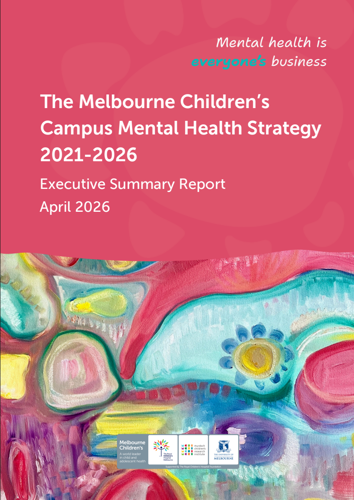
Melbourne Children's Campus Mental Health Strategy 2021-2026
A strategic approach to mental health research, education, and care.
The challenge
Lifetime mental health problems begin in childhood and are among the most common and serious health issues affecting children and young people. Half of all mental health disorders begin before the age of 14, yet many families struggle to access timely, appropriate care.
At The Royal Children’s Hospital, mental health presentations to the Emergency Department have surged by 400 per cent in recent years. Children living with chronic physical illness are at even greater risk, and stigma and fragmented systems often leave families without the support they need.
This growing crisis demanded a bold, coordinated response across the Melbourne Children’s Campus.
Our strategy
Launched in 2021, the Melbourne Children’s Campus Mental Health Strategy set out to make mental health everyone’s business. It has brought together The Royal Children’s Hospital, Murdoch Children’s Research Institute (MCRI), and the University of Melbourne Department of Paediatrics to create an integrated, evidence-based approach to care, research and education.
This project has been funded by The Royal Children’s Hospital Foundation.
The strategy is built on four pillars:
· Family centred care that recognises the vital role of parents and carers
· Trauma-informed and preventative approaches to reduce harm and build resilience
· Consistent, evidence-based practice across all services
· Co-design with lived experience advisors, ensuring children and families shape every step
What we achieved
Over five years, the Mental Health Strategy has delivered significant change across care, research, education and advocacy, improving outcomes for thousands of children and families.
View our Executive Summary Report
Consistent quality care
We developed Australia’s first Evidence-based Clinical Practice Guideline for Anxiety in Children and Young People, first published in 2023, subsequently revised and and endorsed by RACGP, and translated it into practical resources for parents, carers and young people (to be released in 2024). A measurement-based care pilot was introduced in outpatient clinics, improving engagement and outcomes, and work is underway on a new guideline for suicide and self-harm.
Trauma-informed preventative care (TIPC)
To embed trauma-informed practice across the campus, we created a Trauma-Informed Preventative Care Policy and an e-learning package for staff. We strengthened the Behavioural Support Profile in the hospital’s electronic medical record, helping clinicians meet the non-medical needs of children and young people.
Family centred care
Families are at the heart of our work. We introduced a Family Wellbeing Model, supported by an e-learning training package, to ensure parents and carers feel equipped and supported throughout their child’s care journey.
Research
The strategy has funded seven clinical research projects and two large-scale mental health studies, advancing knowledge in areas such as anxiety, trauma-informed care and medically unexplained symptoms. We are also developing core outcome measures for child and adolescent mental health to guide future research and practice.
Education and training
Building workforce capability is critical. We have developed mental health eLearns for staff and integrated our outputs into existing campus programs, ensuring mental health is embedded in everyday care.
Medically unexplained symptoms
To improve understanding and management of MUS, we created an e-learning package for clinicians, drafted Kids Health Info Factsheets, and developed a family-facing resource to be published later this year.
Our Lived Experience Advisor Network provided unprecedented engagement access to nearly 2,000 people of all ages (over 15 years) and backgrounds who identify as having lived experience of mental health concerns and recovery for consultation and co-design with all strategy activities
The Children’s Mental Health Gallery showcases creative expressions and amplifies mental health experiences through art.
Advocacy and resources
We developed the Advocacy Toolkit to equip campus teams to develop and deliver effective advocacy campaigns.
Where to next?
The priorities for the campus include:
· Embedding guidelines into routine care across Victoria
· Expanding trauma-informed and preventative models
· Continuing research into mental health in chronic illness and gender-diverse populations
· Strengthening workforce training to ensure lasting impact beyond 2026.
New resources
Here are resources that have been very recently publish.
Podcast - Lived Experience Leadership in Mental Health
Links
Centre for Community Child Health Campus MH Strategy project page
MCRI Mental Health Strategy impact discovery page
Wrap up celebration
On the evening of Wednesday 24th March the Strategy stakeholders, our Lived Experience Advisors, our staff, and supporters got together for a final celebration event. Here are a few photographs.
